Showing posts with label cooking. Show all posts

Saturday, February 10, 2018

Adventures in French Cooking

Galette Complete 
Before moving to France, I'd been telling people that  I was excited about 3 things (besides the obvious of finally getting to be with Cristian daily)- wine, cheese, and baguettes, in no particular order.  My kitchen, once I was settled in, had much the same ingredients as before, except now with the addition of a rotating cast of cheeses, a couple of bottles of wine always on hand, and a few times a week a crunchy fresh baguette.  But slowly, surely, some more changes started to sneak in.

Poulet rôti épicé and Galettes de pomme de terre 
It all started with the artichoke.  I kept seeing them at the grocery store, looking for al the world like a normal vegetable nestled between the broccoli and the carrots.  Except, I was pretty sure I'd never eaten one other than as artichoke hearts from a jar.  On a whim, I picked one up and decided I would learn how to cook it.  As I paged through the French recipe book my Aunt gave me at my shower, I realized that this was maybe a bit more complicated than your average veggie, but finally figured something out and found the end result surprisingly satisfying.

Lapin a la moutarde
Next were the endives.  These intriguing, lettuce like veggies started appearing at the market in late fall and everyone seemed to be buying them.  I just had to know what made them special, so I did some digging and found a French cooking blog, in English, with an endive recipe.  Endives au gratin was added to our dinner menu for the week and I was hooked.

Now it's my newest hobby- experimenting with French cooking.  Sometimes the recipes are fast and simple like galette complete- a slice of ham, some shredded cheese, and an egg on store bought crepes. Others are more complex like lapin a la moutarde (rabbit in mustard sauce).  We've found some definite winners (mascarpone stuffed chicken breasts, anyone?) and some things we'll probably never repeat (celeriac- no matter how you slice it, dice it, and cook it, I'm just not a fan of this strange gnarly root vegetable), but I've really enjoyed expanding my culinary repertoire.  Now, the question is, what to put on the menu for next week, and who's coming over for dinner?


Tarte fine 


Crème de chou-fleur

Monday, November 30, 2015

Split Pea Pie

“I’ll make a pumpkin pie and an apple pie”, I said. How hard could it be, really?  I’d just bought something that was smaller, greener, harder shelled, and more ridged than a pumpkin at the market the week before, and it was remarkably pumpkin like inside.

Sundays are market days, and the streets were overflowing with vendors. I walked down a crowded lane, fruit displays, papaya, pineapple, granadillas, strawberries, and some fruits I couldn’t even identify forming haphazard towers.  I restacked an orange I’d knocked to the ground as I brushed past and headed past vegetables: tomatoes, red peppers, onions, eggplants and broccoli. I wasn’t noticing any pumpkin-like squash. I headed into the covered market, made a detour to one of the stalls in the back that sells candles and then zig-zagged through past kitchen goods, dried peppers, cheap clothes, fresh fish and more vegetables.  Still no sign of pumpkins.

Outside, and close to giving up, I finally spotted something that looked like a cross between a butternut squash and a watermelon. It just might do the trick. “What color is it inside?” I asked the lady selling it. “Black”, she answered off-handedly. “Black?!”  I asked, surprise in my voice, as my mind mentally cataloged every vegetable dish I’ve ever been served at Guatemalan restaurants and failing to bring a single black squash to mind. But, she continued to insist that it was black, and when I told her I was looking for one that was orange inside and asked if she had any, she pulled another odd shaped winter squash from under some lettuce and presented it to me.  It looked pretty much like the other. “It might be black, it might be orange,” she shrugged, then nicked the outside skin, revealing some pale orange flesh underneath.

I took my pumpkin substitute home and tried to hack it open with my kitchen knife.  When it finally split, I looked at it in consternation.  Blackish green goop and dark greyish green flesh were what the inner layer looked like, only the very outside of the squash was orange at all.  But, I had a pie to make, so I cut it into pieces and stuck it on the stove to boil. 
As I scooped the softened flesh from the shell to make puree I almost stopped the experiment then.  The green vastly overwhelmed the orange and this was going to be the strangest “pumpkin” pie ever.  But, I had just spent an hour buying it, hacking it apart, and boilng it til it was soft enough, and it smelled and tasted pumpkiny enough so I threw it into the blender, and continued my recipe anyway.

Several hours later, my no bake, pea-soup “pumpkin” pie was chilled and ready to go.  And green notwithstanding, I’m thankful that a little bit of cinnamon and nutmeg go a long way towards transforming a mystery squash into a very tasty and almost convincing “pumpkin” pie.


Friday, March 20, 2015

The Joy of Cooking Substitution

If you've spent any length of time outside the US and enjoy baking, you've probably mastered the fine art of substitution.  While I generally try to avoid recipes that call for too many substitutions, my height may have been this Thanksgiving when I made a pumpkin pie in a graham cracker crust.  Except, I didn't have any pumpkin.  Or graham crackers for that matter. . .

Yesterday was a beautiful, sunny day.  The sky was blue, the sun shining through the glass heated my room so much I opened the window, and I had friends coming over in the evening.  It seemed like the perfect day for a spring-time dessert.  I started dreaming about yogurt pie- simple, yummy, and perfect for a warm weather day. And so easy- all I needed was cool whip, yogurt, and a graham cracker crust.  Which is when reality hit.  I have never yet seen cool whip for sale outside the US and as I already mentioned- no graham crackers, let alone pre-made crusts.  But I was determined, and where there's a will there's a way.

Google is basically my best friend when it comes to navigating recipes meant for one country in another.
  • Google search:  adding gelatin to home-made whipped cream makes it hold its consistency and it can be substituted for cool-whip.  
  • Google translate: gelatin= liivate  
  • Google image search: gelatin comes packaged in a container that looks like this (oh, thanks Swedish, I could have identified this without the google translate step.  You never know until you try.)

So, armed and ready, I headed to the grocery store to pick up my gelatin, cream, and yogurt.  Also, some "digestive biscuits" since previous experimenting had lead to the conclusion that this is the best graham cracker substitute. 

Of course, the cooking fun doesn't end there.  Butter here, instead of coming in 4 sticks conveniently marked in tablespoons comes in 500 gram blocks, not so conveniently marked in 50 gram increments.  I was feeling too lazy to pull up the butter conversion website, so I eyeballed it.  The graham cracker crust recipe called for 1/3 cup sugar, which is inconvenient too since I only have a 1/2 cup measuring cup here (randomly included in my set of metric system cups)  More eyeballing, and the crust was good to go.  Then I was on to the cream, which was straight forward, but took ages since a whisk is nowhere near as easy as an electric mixer.


What takes five minutes with a pre-made crust probably took almost an hour to put together here. But it was worth the time, almost too pretty to cut, and rather tasty too.   And I get to add another weapon to my arsenal of secret substitution tricks.

Friday, July 25, 2014

A Working Holiday

Slovakia

July 25th, 2014

Paws, Amber’s Portuguese waterdog, scampered ahead of us into the field.  I climbed the rise and stopped to admire the view: rolling farmland, a couple of farmhouses nestled near forest edges, and windmills cutting into the sky.


After 3 cities full of beautiful churches, lovely rivers, interesting museums, amazing architecture, and miles upon miles of sidewalk in 90 degree weather, Alex and I were ready for a change of pace, which is just what we got at the Good Book Oasis.  Amber runs a guesthouse there for missionaries, and we had come to spend a few days helping out.

It felt good to break with the tourist routines.  We took a visit to Ikea and the local version of Home Depot for some supplies.  After spending considerable time in Ikea in 4 countries now, I think it’s safe to say it looks pretty much the same wherever you go.  Housing supplies stores have a bit more variety.  What intrigued me most about this one was their pet section, including live fish for sale.  Home Depot doesn’t sell fish, does it?

Maybe we needed some good, honest work after the dissipation of being tourists.  We weeded the front flowerbeds and transplanted some bushes in record time.  In the afternoon, covered in sweat and dust, I nodded in satisfaction as a nail disappeared into the board I was nailing to the wall of a storage shed to make a helmet rack. 


After tearing through the to-do lists during the day, we truly enjoyed movie and game nights with Amber in the evenings.  One of Amber’s Slovak friends came over one evening and taught us how to make halušky.  She showed us how to mix flour, water, and egg until it was just the right consistency, and then run the dough back and forth over a tool that looked like a mix between a strainer and a cutting board.  The dough fell in small pieces through the holes into the boiling water, where we let it cook.  The finished product (a kind of homemade noodle, basically) we mixed with sheep’s cheese and bacon.  Think of it as the Slovakian version of macaroni and cheese, comfort food at its finest. 

Tuesday, February 11, 2014

Chinese New Year in Finland

If you've been following my blog for awhile, you may remember this post, when I celebrated Chinese Mid-Autumn Harvest Festival in Colombia.  Well, it's been awhile since I've enjoyed Chinese dumplings, and they are much too much work to bother with for just one person (and besides, how on earth would I eat so many?), so I figured Chinese New Year was the perfect occasion to invite some friends over and celebrate.  

Lucky for me, there's an Asian grocery right downtown, so I got almost everything I needed.  Ground pork was the hardest. After asking (in Finnish!  Go me!) if they sold it at 2 stores, and being told no at one, and it was sold out at the other, I finally settled on a 60%pork, 40% beef mixture.  (I should really ask some Finnish friends why they sell it. . .  Anyways, if you're ever in Finland and making dumplings, it works fine if you can't find ground pork). Oh, and don't plan on serving green beans in Finland in February.  After searching in 4 stores, I finally found a largish handful for €3.80. It didn't seem worth the price to me.


On the menu: Pork (ok, ok, pork/beef) dumplings, orange chicken, spoon vegetables, jasmine rice, and bubble tea.  The orange chicken was a new recipe and it was delicious. If you're looking for a new recipe, you should give it a try.  

Have I mentioned what wonderful friends I have here?  I was running a bit late, (searching for green beans and ground pork in 4 grocery stores the day of will do that to you) so they pitched in and helped assemble dumplings and cook the veggies while I finished off the chicken and bubble tea.  


Dinner finally ready, we sat down to eat.
Well, I never said they were normal
 We ate until we were full.  Then we kept eating.  We ate until there wasn't anything left to eat, and then took a break for dessert.
So yummy
And then, in true international fashion, we combined one celebration with another.  We happened to be celebrating Chinese New Year a few days late, and it also happened to be Runeberg's day, a day to celebrate a 19th century Finnish poet who penned the national anthem.  For whatever reason, it's typically celebrated by eating Runeberg's Torte, so  eat them we did, compliments of Alistair and Birte.

新年快樂!
(xin nian kuai le- Happy New Year!)


Saturday, December 7, 2013

The American Dinner!

Rewind to September.  The International Students organization hosted a Finnish dinner.  Somehow my innocent offer to "help cook" at the next International student dinner transformed into "plan, shop, cook, and host" when another American also offered to help cook.

Which explains why one Saturday morning found us in a common kitchen, surrounded by towers of canned goods. I was chopping a mountain of onions while Alistair browned onions and Paulina scrubbed potatoes.  "What can I do?" Jonathan asked.  "You can open the crushed tomatoes" I said, searching for my pocket knife.  I knew I'd left it somewhere and none of us had brought a real can opener.  Fifteen cans later, plus 15 cans of kidney beans and pounds of green peppers, onions, and ground beef later, our chili for 50 was simmering on the stove.


As it simmered, we hung stars from the ceiling, rearranged furniture, and set the tables.  Five o'clock and the place was decorated and the food almost ready.  We were ahead of the game.  I slipped home to change and got back in time to help with the appetizers.


As guests came through the door I stuck a name on their back, giggling a bit at some of the mismatches.  "Oh, this one's perfect for you" as I stuck Princess Jasmine on a very decidedly not princess like man's back.  They were instructed to figure out who they were by asking questions, and then to find the person who had their match.  It was our cleverly designed ploy to require guests to mingle.  And it worked.  :)  The food helped too.  Chips and dip and pigs in a blanket seemed like perfect American party foods, but we had to supplement them with the most quintessential American ingredient we could think of: peanut butter.
The quintessential American ingredient in 2 very school child forms  
The room, ready for guests.


Mingling

Once everyone had found their partner, we lined them up for contra-dancing.  Alistair (my token American friend and partner in crime, or event planning, whichever the case might be) also happens to play the fiddle.  So, he explained the steps as we tried to maneuver around each other in a room most certainly not designed for 25 couples to dance in.  We had to restart from the beginning multiple times before we made it through the first set of steps, but when we managed it successfully, the whole group spontaneously burst into applause.

Some of the awesome people who helped
Ice thoroughly broken now, we sent people in to find a seat and served chili and baked potatoes.  I found an empty seat at a table of French speakers from France, Switzerland and Belgium to eat some chili, then got up to help get dessert ready.  While pancakes aren't traditionally a dessert, everyone loves them, and most of the rest of the world eats crepes, not our fat, puffy, wonderful pancakes.  To make things even better, we served them with maple syrup and whipped cream.  I joined a table with people from Azerbaijan, Chile, Romania and Albania for the dessert course.  And may or may not have finished off all the whipped cream in the bowl when the pancakes were gone. . .

Tuesday, April 30, 2013

Colombia in my kitchen

One beautiful warm and sunny day, my friend Doris and I were out running errands.  We stopped for a snack and ordered buñuelos (fried dough balls made of cornstarch and cheese.  They're way better than they sound, take my word for it).  Doris ordered "avena" to go with hers.  Seeing as avena is a direct translation for oatmeal, I shied away from that and ordered a soda.  But then, Doris' avena came.  I tasted it.  It was cold, creamy, sweet, almost milkshake like.  I changed my order- who would drink soda when they could have avena?

You can find it made in giant vats on the street in Bogotá, served from peddled carts, or sold at the grocery store prepackaged in yogurt-like containers or single serving bags. Avena isn't always served cold,  it's also a common enough breakfast drink served hot.

Now, unfortunately, my avena doesn't turn out quite as delicious as the avena I tried with Doris.  But it is a tasty treat.  So, if you're looking for something different here's my "recipe"

Start with some pre-cooked oatmeal

In a blender mix about 1/2 cup cooked oatmeal, 2 cups milk, 2 TB sugar and 1/4 tsp vanilla (I'm really guessing on the measurements. . . I just eye balled it and tasted to see if it seemed right).  Add some ice and blend until smooth and creamy.  Stick it in a fun cup and enjoy!  You can also add cinnamon instead of or in addition to vanilla.  Skip the ice, and just stick it back on the stove to heat through after blending if you want to try it hot.


Let me know if you try and make it!

Thursday, September 13, 2012

Time for a career change?

My friend Edwin knows my love of all things Chinese, so when he and some classmates had to do a presentation about Chinese cuisine, he recruited me in the testing stage.

We made papaya dumplings (which were an utter failure.  As far as I'm concerned, even deep frying can not redeem cooked papaya)

We also made yin yang soup.  It's deceptively simple.  Boil some prawns and calamari with a smidgen of MSG thrown in for good measure.  Beat an egg and swirl it into the broth.  In another pot boil finely chopped spinach (again, a little bit of MSG never hurts. . .)  I think Edwin may have thrown it into the blender.  I was trying not to throw things across the room at that point as I reached my frustration level trying to roll out unworkable dumpling dough.  Once the two soups are cooked, place a ladle of the egg drop soup in the bottom of the bowl.  

With a spoon, carefully spoon the spinach soup on top in the shape of a yin yang.  


It looks pretty awesome and was really tasty too.


I surprised myself with my artistic talent.  I think it might be owing to wearing a chef jacket.  


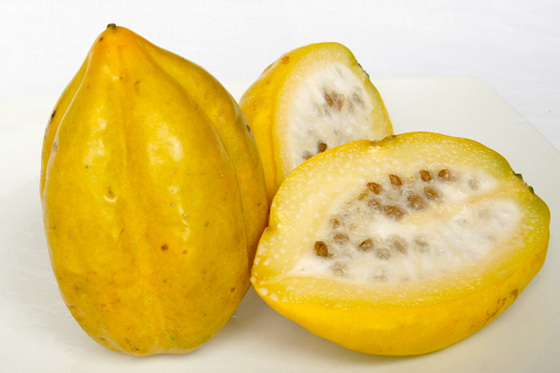
Another fun discovery was this fruit- it's called papayuela.  Neither Edwin nor I knew what it was, so we decided to buy one just to experiment. They need to be cooked, but had a wonderful sweet/tart flavor.

 Next on my list of things I want to experiment with in the kitchen- these "rawvioli" made from beets

Monday, October 31, 2011

Cook-out, Colombian style

The day started out gorgeous and sunny, but by midmorning it was chilly and overcast. That didn't stop our plans though. In the kitchen we chopped onions and tomato, marinated meat, scrubbed potatoes and peeled yuca. Outside, they worked hard at getting the fire lighted.


the view from the grill
Once the grill was lit, Edwin, Alex, and the teens took over grilling while Bibiana and I made arepas (a corn-based flat bread)
the grill masters


me, making arepas

Despite the fact that we started before 11, lunch wasn't ready until 4. It was worth the wait though: grilled meat, ripe plantain, guacamole, arepas, salted potatoes with hot sauce, yuca, salad. Enough for 26 people with leftovers. And believe me, we ate.

the finished product (not pictured- grilled ripe plantain or my plate of seconds)


Saturday, October 16, 2010

A taste of Colombia

Patacones with tuna salad

This is not an authentic Colombian recipe, but it does incorporate a lot of very traditional Colombian ingredients, and everything in it is readily available in the States. Patacones are popular here (and in a lot of Latin America, though they are known as tostones in Puerto Rico and the Dominican). I got the idea of eating them with tuna when some Venezuelan friends showed up one day when I was making patacones for dinner and they suggested it. Cilantro and lime are 2 very popular seasonings.

Slice a green plantain on the diagonal and fry in oil, turning over once. (Use one plaintain for every 1-2 people) Remove from frying pan when both sides are golden. (A friend told me the trick to this is to cook them over low heat so that the inside starts to get soft too, and it isn't just the edges that touch the pan that turn start to burn)


Place your fried plantains between 2 pieces of plastic. Using a flat oject (a cutting board works well), smash the plantain flat. Stick it back in the frying pan to cook until it is golden brown and crunchy. Set the patacones in a colander or on a papertowel to drain of some of the oil.


In a bowl, mix one can of tuna in water (drained), mayonaise, juice from 1/2 of a lime, cilantro, chopped tomato (I used 3 small tomatoes), canned corn (I used maybe 1/3 of the can), and chopped cucumber (I only used 1/2, but it would have been better with more). Onion would be good to add too, but I'm not a big fan of raw onion, so since I was just cooking for me, I didn't add any.

Top the patacones with the tuna salad. Enjoy!


Wednesday, June 2, 2010

Dumplings in Colombia

As I walked out of the 2nd store where I'd failed to find ground pork (after stopping by a roadside stand to pick up cabbage, garlic, and green onions), I contemplated my options- take the 20 minute walk to Exito and hope they had it there, or give up and make beef dumplings. I wasn't sure I had time to walk to Exito and back and still get my dumplings made by 7, but I didn't want to give up either, so I walked toward ninth, trying to make up my mind.

Somewhere along the way I remembered the butcher shop which was practically on my way home. Once someone appeared from the back, I told her what I wanted and waited as she took it to the back and ground it for me.

Everyone was busy in the kitchen, so I took over the dining room. I mixed my dough and started chopping cabbage, glancing every once and awhile at our family blog where I posted the recipe the first time I made dumplings. J (she's a 12 year old Colombian-American) came over to see what I was doing and saw the power point I had open which I hadn't had time to start. She offered to help, so while I made Chinese dumplings and we listened to salsa, she worked on a slide show about the United States.

KT (a 5 year old) came over to watch too, and she wanted to help. So, while I rolled out dumpling wrappers, I showed her how to put a spoonful in each one and seal them. She's a careful little worker, and loves to help. She did a great job, though at times she liked to be silly and ask me if she should put in about 3 times the amount of filling I showed her.

After we'd been working awhile, everyone from the farm arrived. E (3) and T (not quite 2) wanted to help too. So, we pulled up chairs to the table and I gave everyone a ball of dough to roll out.

Everyone who walked by wondered what we were making until they saw the ready-to-be cooked dumplings. Then, to a Colombian, the answer was obvious. "Oh, you're making empanadas!" Well, sort of. I told them they were a Chinese version of empanadas.

Culture night was pretty awesome. We had food from Colombia, Venezuela, the US, New Zealand, Holland, and, of course, my dumplings. And, once the food was eaten and the presentations over, we cleared away the chairs, and danced. I love that social dancing is a part of life here.

Sunday, January 10, 2010

Gallo Pinto

Gallo Pinto is THE typical breakfast food in Costa Rica. It's so standard it has made it onto the breakfast menu at Subway and McDonalds. The homeless man who lived in our neighborhood would always complain that we didn't give him gallo pinto when he stopped by at breakfast time. He really didn't seem to believe me when I told him we ate cereal for breakfast except on the weekends. We served gallo pinto every time we went to the Salvation Army. It was our Saturday standard on the base, and was made for us on outreach by Rebeca's parents, and Doña Esther, the Pastor's wife in Volio. We made it and served it to taxi drivers in Monteverde. It is the one Costa Rican dish that I made often enough that I could make it at home without looking for directions. Here, roughly, is the "recipe" I followed. Thanks to Rossela, Kathia, Rebeca, Doña Esther, Luis, Manny and anyone else I might have forgotten who gave me tips and helped me learn to make pinto. :)

Gallo Pinto: serves 4-6

1 1/2 cups rice
1/2 pound black beans
1 red pepper
1 onion
cilantro
celery
2 cloves garlic
Salsa Lizano
vegetable oil

The night before prepare your rice and beans.

For the rice: Dice about 1/3 of a red pepper and half an onion into tiny pieces. Saute them in a little bit of vegetable oil. Add the sauteed peppers and onions to the bottom of a rice cooker. Rinse your rice, then add it to the rice cooker, season with salt, and cook as normal. (If you don't have a rice cooker, just cook your rice the same way you usually do, leaving the sauteed onion, pepper, and oil in the bottom of the pot) (If you've never rinsed rice before, you probably don't need to. BUT, if you have a Costa Rican looking over your shoulder, I recommend it. Here's my strategy- fill the pot or bowl with some water, swish it around with my fingers, find 3 little nearly invisible rocks, dump the water, repeat. Call the rice rinsed. Are there ever little rocks in the rice in the US? maybe that's why we never rinsed it here. . .)

For the beans:
Cover the beans with 3-4 cups of hot water and bring to a boil. Boil for 2 minutes, turn off heat and let soak for an hour. Soak and drain beans. Refill the pot with water. Add 2 sticks of celery and 2 cloves of garlic. (I cut mine into pieces, but I didn't mince it. You can also just throw the cloves in whole, but I don't think that adds much flavor). Add salt to taste. Boil beans over low heat until they are soft. (Keep checking, you may need to add water at some point if your pot wasn't really large enough. I'm not sure how long it takes- I cooked and we ate dinner and cleaned up, and then the kids watched a movie all while the beans were cooking, so I'm guessing 2+ hours. If you have a pressure cooker, use that, that's what we always did in Costa Rica. Or, you could cook them over a wood stove. That seems to be a bit faster.

Once your rice and beans are cooked, cover them and leave them on the counter overnight.

The next morning:
Dice the rest of the onion and the red pepper super fine. Saute them in a large frying pan or wok.

Add the beans to the mixture. As you add them, break them with the spoon. (The goal is to have the beans slightly broken, but still mostly retaining their shape. This allows them to add color to the rice. At least, I think that's why you do it. I don't really know)

Once your beans are slightly fried and smelling delicious, slowly add in the rice. There shouldn't be so many beans that they overwhelm the rice, but there should be enough beans that the rice loses its white coloring. When you're happy with the combination, add salt and lizano sauce to taste. (Good luck with the lizano sauce. You might be able to find it in an international grocery, if not, order it here.) Chop some cilantro and sprinkle on top.


Serve with scrambled eggs. Fried sweet plantains, home made tortillas, and queso fresco also make good accompaniments.
¡Buen Provecho!

Monday, December 22, 2008

Empire Cookies


These empire cookies (the cookies in the front of the photo) are not one of our family's traditional Christmas cookies, but they have the potential to become one. I first made them for an around-the world story time, and liked them so much I saved the recipe. I thought they would make a nice Christmas cookie with a little bit of decorating. The raspberry jelly makes these cookies delicious, and they look pretty too.
Empire Cookies
Recipe compliments of Allrecipes.com

INGREDIENTS
1/2 cup butter
1/2 cup white sugar
1 egg
1 teaspoon vanilla extract
2 cups all-purpose flour
1 teaspoon baking powder
1/2 cup raspberry jam
1 cup confectioners' sugar
1/4 teaspoon almond extract


DIRECTIONS
Cream butter. Add sugar, creaming well. Beat in egg and vanilla. Combine flour and baking powder; gradually add to creamed mixture.
On a lightly floured surface, roll out dough to 1/8 inch thickness. Cut into 2 inch rounds, and place on ungreased baking sheets.
Bake at 350 degrees F (175 degrees C) for 10 minutes, or until very lightly browned at edges. Cool thoroughly.
Spread half of the cookies with jam, and top with remaining cookies.
Combine confectioners' sugar, almond extract, and enough hot water to make a thin icing. Frost tops of cookies.